Whole Home Surge Protection: Why It Matters
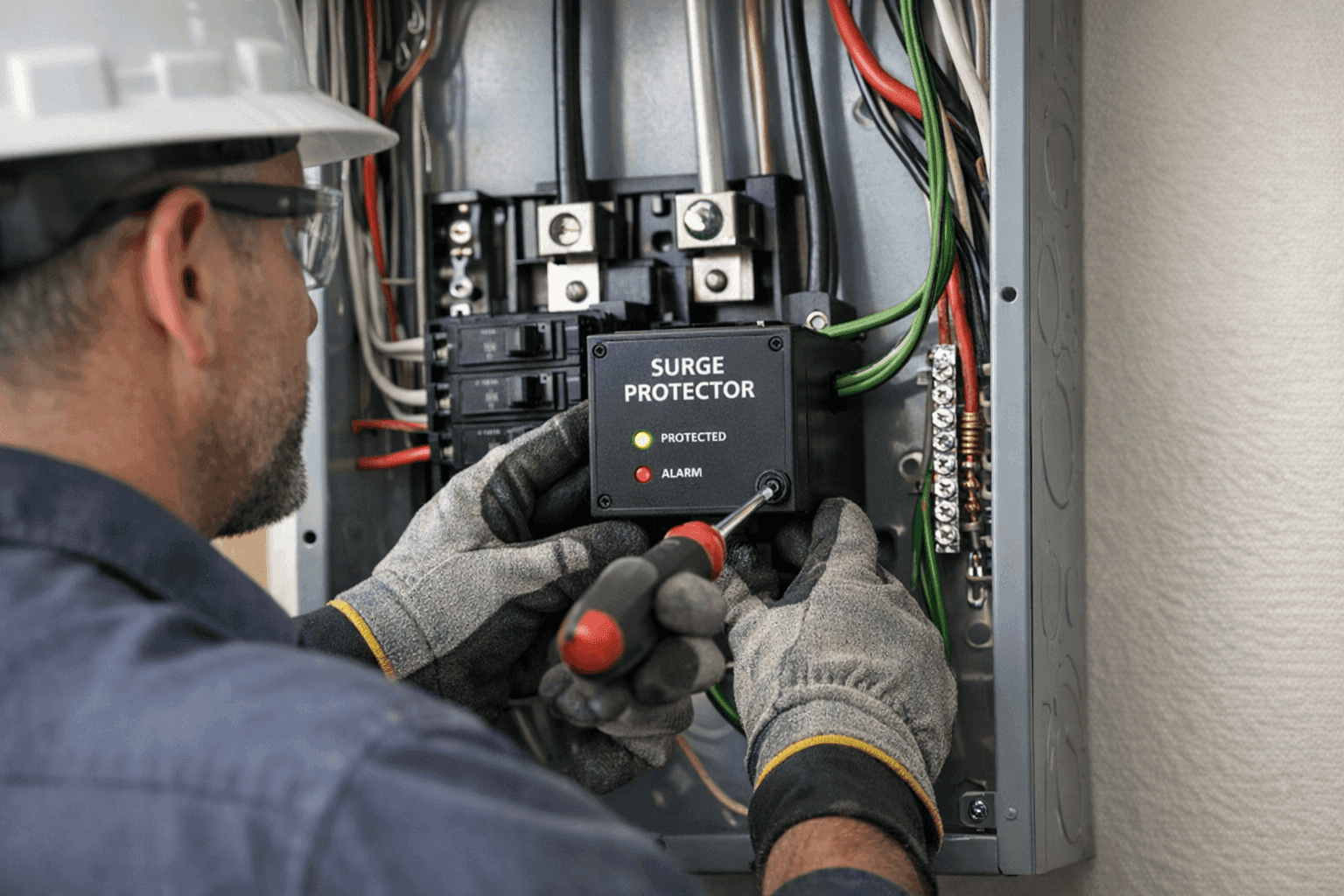
Power surges don’t knock before entering. They barge in, sometimes in a flash, sometimes quietly, always unwelcome. One moment—everything works. The next, your favorite devices are fried, and you’re left wondering what just happened. At TXC Electric, we’ve seen too many homes and businesses deal with the aftermath.
Electricity is essential, but it’s also unpredictable. Protecting your property’s heart—its electrical system—shouldn’t be an afterthought. Let’s walk through why surge protection matters, what you can do, and how partnering with a qualified electrician can keep your home or business powered, safe, and secure.
What Causes Power Surges? ⚡
Surges are like electrical tidal waves. Sometimes they crash, sometimes they ripple. But they always leave a mark.
Common causes include:
- Lightning strikes: Rare but intense, a single bolt can send a surge racing through your wiring.
- Power grid switching: Utility companies occasionally switch grids, creating momentary spikes.
- Downed power lines: Whether from a storm or accident, sudden changes in the grid can push surges into homes.
- Large appliances: Refrigerators, air conditioners, and pumps can cause small, daily surges as they cycle on and off.
- Faulty wiring or panels: Poor connections or aging panels can create hotspots for surges.
According to the National Electrical Code (NEC), surge protection is now recommended for most new homes and many renovations. Electrical System Installation near you should always factor in surge protection at the design stage.
Signs Your Home Needs Protection
Not all damage is dramatic. Sometimes, the signs are subtle, like a book’s pages yellowing with age. Watch for:
- Flickering lights when major appliances start
- Devices that suddenly stop working
- Tripped circuit breakers without obvious cause
- Electronics that feel unusually warm
- Burn marks or buzzing at outlets
If you notice any of these, it’s time to consider surge protection. Don’t wait for a bigger, costlier problem.
Types of Surge Protectors
Think of surge protectors as bodyguards for your electronics. But not all bodyguards are equal.
Point-of-Use Surge Protectors
- These are your familiar plug-in power strips.
- Good for protecting TVs, computers, and small appliances.
- Not enough for whole-house safety.
Whole Home Surge Protectors
- Installed at your main electrical panel.
- Defend every circuit and outlet.
- Shield everything from your fridge to your phone chargers.
Panel-Mounted Surge Protectors
- Installed directly on or inside your electrical service panel.
- Offer robust protection where surges typically enter.
For true protection, our electricians recommend whole home solutions combined with key point-of-use protectors for sensitive devices. Learn more about these solutions on our Surge Protection page.
Installation Process: What to Expect
Installing a surge protector isn’t a DIY project. It’s more like surgery for your electrical system—precision matters.
Here’s what happens:
- Consultation: A licensed electrician inspects your panel and wiring.
- Assessment: We identify where surges might enter—main panel, subpanels, or critical circuits.
- Selection: Based on your needs, we recommend the best surge protector for your setup.
- Installation: Power is safely shut off. The device is installed, wired in, and tested.
- Verification: Everything is double-checked for safety and code compliance.
Most installations take only a few hours, with minimal disruption. We tidy up after ourselves so you’re left with protection, not a mess.
Preventing Damage: The Real ROI
Electronics are woven into daily life. Think about what you’d lose—not just in gadgets, but in productivity and peace of mind.
Surge protection pays off by:
- Preventing costly repairs or replacements
- Reducing downtime for businesses and home offices
- Meeting insurance requirements (many policies now require surge protection for claims)
- Extending the lifespan of appliances, HVAC equipment, and sensitive electronics
The National Fire Protection Association (NFPA) and Electrical Safety Foundation International (ESFI) both recommend comprehensive surge protection for homes and businesses. It’s not just a smart move—it’s often required by code.
Quick Safety Checklist ✅
Not sure if your property is surge-ready? Run through these:
- Do you rely on power strips for major electronics?
- Do you have older wiring or panels?
- Have you experienced unexplained outages or device failures?
- Is your home office loaded with sensitive gear?
- Do you have a pool, spa, or motorized equipment outside?
If you answered yes to any, schedule an electrical safety inspection. It’s the first step toward safer living.
DIY vs. Call a Pro
You wouldn’t trust just anyone to repair your car’s brakes. The same goes for your wiring.
DIY surge protectors (power strips):
Easy to buy, but limited in scope. They’re only as good as their placement—and they don’t protect hard-wired equipment.
Professional installation:
A licensed electrician ensures your surge protector is properly rated, installed to code, and actually shields your entire home or business. At TXC Electric, safety is our priority.
What Pros Do On Arrival
When you call in a pro, here’s what to expect:
- Full inspection of your electrical panel and major circuits
- Testing for existing surge vulnerabilities
- Recommendations tailored to your property (not a one-size-fits-all solution)
- Safe, code-compliant installation
- Clear explanation of maintenance and what to watch for
Every step is documented, and you get peace of mind knowing your investment is protected.
Costs & Time Factors
Surge protection isn’t an expense—it’s an investment in security.
- Average cost: Varies by home size and system complexity. Typically, whole home protection is much less than replacing a single major appliance.
- Time: Most installations are completed in one visit.
- Disruption: Minimal. Power is briefly turned off, but there’s no messy demolition.
Ask us for a quote that matches your needs and budget.
When It’s an Emergency
Sometimes, you don’t get a warning. If you’ve experienced:
- A lightning strike nearby
- Major appliances failing suddenly
- Burning smells or scorch marks at your panel
Turn off power and call an electrician immediately. Fast action can prevent fires and further loss.
FAQ: Your Surge Protection Questions
Q: Does my insurance cover surge damage?
A: Some policies require proof of surge protection. Check with your provider and keep records of installations.
Q: How long does a surge protector last?
A: Most are rated for several years, but should be checked annually as part of routine electrical maintenance.
Q: Will surge protection affect my power bill?
A: No. It works passively, only activating when a spike occurs.
Seasonal Considerations
Storm season brings more than rain. It brings spikes, outages, and headaches.
- Spring/Summer: Thunderstorms increase risk. Surge protection is a must.
- Winter: Utility grid shifts and ice storms can cause unexpected surges.
Plan ahead. Don’t wait for storm clouds—get protected now.
Common Mistakes to Avoid
- Relying on power strips alone
- Forgetting to protect hard-wired devices (think HVAC, ovens, washers)
- Skipping professional assessment for older homes
- Ignoring subtle warning signs like flickering or unexplained outages
A little prevention goes a long way.
Signs of Trouble: When to Upgrade
- Your panel is more than 15 years old
- You’ve added new appliances or tech
- You’ve had repeated breaker trips or outages
- Your insurance agent mentions surge protection
If any of these ring true, it’s time for an upgrade.
Timeline & Disruption
You might worry about downtime. Most installations take less than half a day. There’s no need to move out or upend your routine. Our team works efficiently, quietly, and always puts safety first.
Materials & Equipment
We use only UL-listed, code-approved surge protectors. That means every part is tested and certified. We match the device to your panel type, load, and risk level—never generic, never guesswork.
To learn more about your panel options, visit our Panels & Breakers page. For a full menu of residential solutions, check out Residential Services.
How to Choose a Professional Installer
Look for:
- Proper licensing and insurance
- Clear, up-front communication
- Solid reputation and references
- Ability to explain your options clearly
- Willingness to perform code-compliant work
If you need an electrician company, TXC Electric is here for you—no matter the size of your project.
Final Thoughts: Invest in Peace of Mind
Power surges may be invisible, but their damage is all too real. Whole home surge protection is a shield—a quiet sentinel that stands guard 24/7. Don’t wait for disaster. Take action today.
Call TXC Electric now — or reach us anytime at 855-557-6564 .