How to Troubleshoot and Repair Ceiling Fans
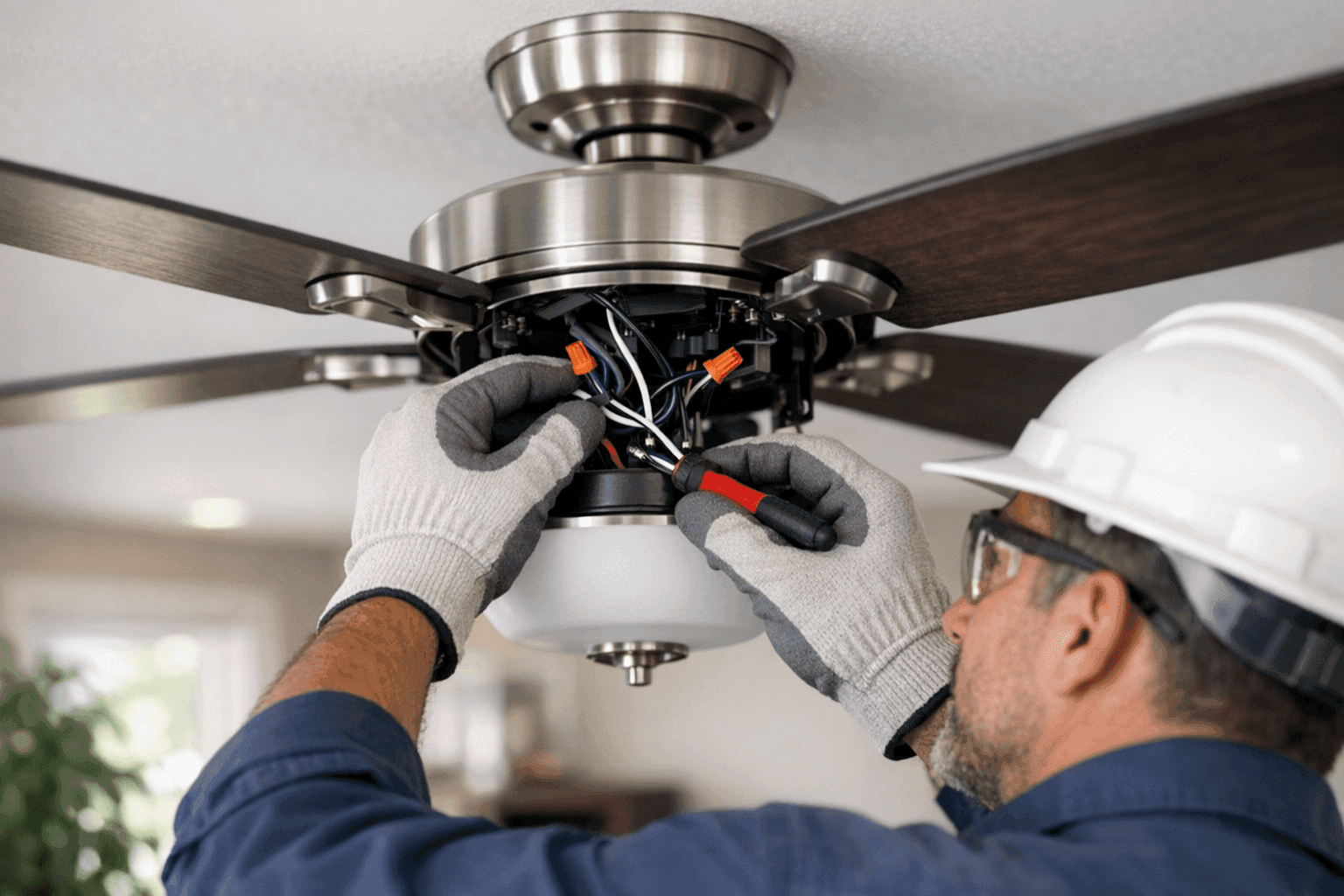
Ceiling fans keep homes cool and energy bills low. But when they start to wobble, buzz, or stop spinning, it can throw your whole comfort off balance. If your ceiling fan is acting up, don’t sweat it—most issues are simple to spot and fix with a little guidance.
At TXC Electric, we know how important it is to keep your home or business running smoothly. This guide will walk you through safe, practical steps to diagnose and repair common ceiling fan problems, while helping you decide when it’s time to call in an electrician.
Common Fan Problems
From the subtle whir of blades to the sudden silence of a stalled fan, ceiling fans can show a range of issues. Here’s what most folks run into:
- Fan won’t turn on at all
- Blades wobble or shake
- Unusual noises: humming, clicking, or buzzing
- Slow or uneven spinning
- Lights flicker or don’t work
- Remote or wall control issues
Each of these problems can have more than one cause. Let’s break them down and find out what you can do next.
Quick Safety Checklist 🛑
Before you climb a ladder or grab a screwdriver, pause. Safety isn’t just a box to check—it’s the foundation of every repair.
- Turn off power at the breaker panel (not just the wall switch).
- Use a sturdy ladder. Avoid chairs or makeshift steps.
- Keep hands dry and tools insulated.
- Make sure the fan is completely stopped before touching.
- If you smell burning or see smoke, step away and call an electrician immediately.
The National Electrical Code (NEC) and Occupational Safety and Health Administration (OSHA) both stress the importance of de-energizing circuits before any electrical work.
Signs of Trouble
Is your fan making a racket, wobbling like a washing machine, or refusing to spin? These symptoms can point to:
- Loose screws or mounting brackets
- Unbalanced or dirty blades
- Burned out capacitors or switches
- Faulty wiring or connections
Ignoring these signs can risk damage—not only to the fan, but also to your home’s electrical system.
DIY Troubleshooting: What You Can Safely Check
Some ceiling fan issues have simple fixes. Here’s what’s typically safe for a handy homeowner:
- Check for loose blade screws. Tighten gently; overtightening can crack plastic.
- Clean blades. Dust can throw off balance and cause noise.
- Test the wall switch or remote. Replace batteries or check for tripped breakers.
- Inspect for obvious wiring issues. If wires look burnt, frayed, or melted, stop and call a pro.
If the fan still misbehaves after these steps, it may be time for deeper fault finding.
Balance and Noise Issues
A wobbly ceiling fan is like a wobbly tire—it needs rebalancing. Try this:
- Switch off power.
- Clean each blade thoroughly.
- Tighten all blade and bracket screws.
- Use a balancing kit (most fans include one) to find the trouble spot.
- Move blade weights as needed until the wobble stops.
Persistent noise could also mean motor problems, worn bearings, or an installation issue. If a gentle cleaning and tightening don’t fix it, don’t push your luck. Electrical System Installation near you can help prevent bigger headaches.
When to Call a Pro
Let’s be clear: not every job is DIY-friendly. Call an electrician if:
- The fan wiring looks damaged or burnt
- The fan won’t turn on, and breakers are fine
- You’re not comfortable working off a ladder
- There’s a burning smell or visible smoke
- The fan is attached to old or aluminum wiring
- The wall switch or remote system needs rewiring
Some repairs—like replacing a motor, capacitor, or dealing with aluminum wiring—require special tools and know-how. Electrical codes vary, and safety comes first.
Safe Repairs for Homeowners
For minor fixes, keep it simple:
- Replace a remote battery
- Tighten fan blades and light covers
- Swap out a light bulb
- Reset a tripped breaker
If you’re comfortable and the fan is well within reach, you can also:
- Install a blade balancing kit
- Clean dust from the motor housing
Never attempt to rewire a ceiling fan, replace a capacitor, or install a new fixture unless you’re absolutely confident and have turned off all power at the breaker.
What Pros Do On Arrival
A licensed electrician brings more than tools—they bring a practiced eye. Here’s what you can expect:
- Inspect all wiring and wall controls
- Test voltage and continuity with specialized meters
- Check for code compliance
- Diagnose deeper motor or capacitor issues
- Ensure secure mounting (especially in older homes)
- Provide recommendations for repair or replacement
Having a pro means peace of mind and a fix that’s built to last.
Prevention & Maintenance Tips
Want your ceiling fan to run quietly and smoothly for years? Here’s how:
- Dust blades monthly to prevent imbalance
- Tighten screws every season
- Lubricate bearings if the manufacturer recommends it
- Watch for flickering lights or odd sounds
- Replace aging remote batteries annually
If you’re already scheduling electrical maintenance, ask your electrician to check the fan during routine visits.
Costs & Time Factors
Most minor fan fixes—tightening screws, cleaning, or blade balancing—can be done in under an hour. More involved repairs, like wiring or motor replacement, can take longer and may require special parts.
- DIY fixes: Usually free or low-cost
- Professional repairs: Vary based on complexity. Motor or wiring repairs may require a service call.
Remember, safe repairs are always worth the time and investment.
When It’s an Emergency
If you see smoke, sparks, or smell burning from your ceiling fan, kill power at the breaker and clear the room. These are signs of electrical fire risk and need immediate attention from a licensed electrician.
Never try to fix burnt wiring or a melted fixture yourself. Your safety—and your property—are too important.
Timeline & Disruption
Most ceiling fan troubleshooting causes little disruption. Even professional repairs usually take less than half a day. For commercial spaces, schedule repairs after hours to avoid downtime.
Common Mistakes to Avoid
A few missteps can turn a quick fix into a bigger problem:
- Working with power still on
- Using the wrong size screws or blades
- Forcing blades or parts into place
- Ignoring manufacturer instructions
- Overlooking the need for secure mounting
Always double-check your work, and when in doubt, consult a professional.
Materials & Equipment You’ll Need
For basic troubleshooting:
- Phillips and flat-head screwdrivers
- Stepladder
- Blade balancing kit
- Clean cloths
- Replacement bulbs or batteries
For anything involving wiring or parts replacement, leave it to your local electrician.
FAQ: Ceiling Fan Troubles
Why does my fan hum but not spin?
Often a sign of a bad capacitor or motor—call a pro.
Can I use a dimmer switch with a ceiling fan?
Not unless it’s rated for ceiling fans. Most dimmers can damage the motor.
What if my fan wobbles after installation?
Double-check all screws and blade brackets. Use a balancing kit.
Is it safe to install a ceiling fan where a light fixture was?
Only if the electrical box is rated for ceiling fans. Otherwise, it can be dangerous.
Seasonal Considerations
Change your fan direction with the seasons: counterclockwise in summer for a cool breeze, clockwise in winter to circulate warm air. Clean and check your fan each spring and fall for best results.
Electrical Codes and Safety Guidelines
Always follow NEC guidelines when working on electrical systems. Ceiling fans should be installed with UL-listed boxes and wiring, and all work must comply with local codes. When in doubt, consult a licensed electrician.
When to Replace Instead of Repair
Sometimes, it’s better to let go. Replace your ceiling fan if:
- The motor is burnt out and replacement costs more than a new fan
- Blades are cracked or warped beyond repair
- The fan is over 10–15 years old and showing its age
- The style or size no longer fits your space
Upgrading? TXC Electric can help with safe installation and repairs for peace of mind.
Whether you’re facing a noisy fan or a complete breakdown, TXC Electric is here to help with every step—from troubleshooting to safe, reliable ceiling fan repairs. For fast, friendly service and answers to your toughest electrical questions, Call TXC Electric now — or reach us anytime at 855-557-6564 .