How to Prevent Electrical Surges During Storms
Storms can roll in fast, bringing heavy rain and winds. But what many homeowners and business owners don’t see coming is the surge—an invisible, powerful jolt that can fry electronics and damage wiring in an instant. If you’ve ever lost a refrigerator, computer, or expensive appliance after a thunderstorm, you know the headache and cost. At TXC Electric, we’ve helped families and companies across the region stay safe when lightning strikes and the grid gets shaky.
Surges aren’t just an inconvenience. They’re a serious risk to your property and your safety. Let’s dig into why surges happen, how to shield your space, and what to do if an electrical surge strikes.
Why Surges Happen in Storms ⚡
When a storm is brewing, the electrical system in your home or workplace faces a unique threat. Lightning is the most dramatic culprit, but it’s not alone:
- Lightning Strikes: A bolt can hit power lines or even your home directly, sending a tidal wave of electricity through your wiring.
- Grid Surges: Utility companies sometimes switch power sources or restore power after an outage. This sudden rush can send a surge into the system.
- Restoration Surges: When the lights flicker back on after a blackout, a “power rush” can overload unprotected circuits.
Imagine the electrical system as a network of highways. During a storm, it’s like a flash flood hits—too much energy tries to travel at once, and anything in its path can be overwhelmed.
Preparing Your Home or Business Before the Storm
A little preparation can mean the difference between a minor inconvenience and major damage. Here’s what you can do:
- Unplug Non-Essential Devices: TVs, computers, chargers—if you don’t need them, pull the plug.
- Check Your Wiring: Old or damaged wiring is like a leaky pipe during a flood. Schedule an inspection if you’re unsure.
- Secure Your Backup Power: Make sure generators are working and tested safely.
- Trim Nearby Trees: Branches can fall and knock power lines, increasing surge risk.
A professional electrician can help with a full safety check, especially if you haven’t reviewed your system lately.
Surge Protection Devices: The First Line of Defense
Surge protectors act like bouncers at the door—only letting the right amount of electricity through. There are a few key types:
- Point-of-Use Surge Protectors: These are the power strips you plug your computer or TV into. They’re helpful, but not enough on their own.
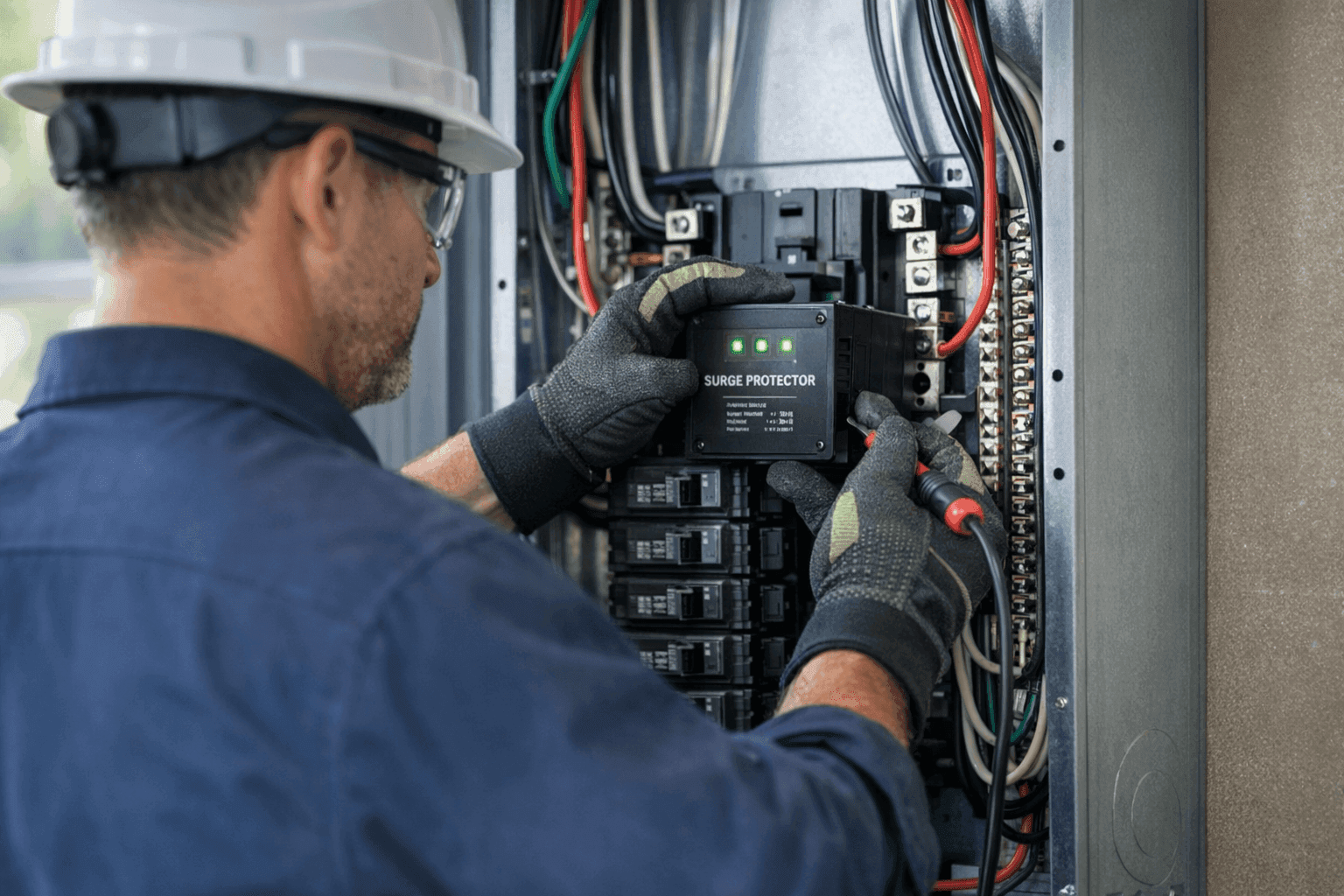
- Whole-Home Surge Protectors: Installed at your electrical panel, these devices block surges from entering your wiring in the first place.
- Panel Upgrades: Older breaker panels can sometimes fail during a major surge. Upgrading can add an extra layer of safety.
A certified electrician from TXC Electric can install and test these devices to meet National Electrical Code (NEC) safety standards. If you’re searching for “Electrical System Installation near you,” make sure to ask about surge protection options.
Quick Safety Checklist for Storm Season
- Test all smoke and carbon monoxide detectors.
- Ensure backup generators have fuel and are in working order.
- Check that surge protectors are rated for your current equipment.
- Schedule an electrical safety inspection if you haven’t had one in the last year.
- Keep emergency numbers handy for a 24 hour emergency service call.
DIY vs. Call a Pro: When to Get Help
Some tasks are safe to handle on your own. Unplugging electronics or checking your generator is usually fine. But when it comes to wiring, panel upgrades, or whole-home surge protection, it’s best to call a licensed electrician. Electrical codes and safety standards exist for a reason—improper installation can do more harm than good.
What Pros Do On Arrival
When you call TXC Electric during or after a storm, here’s what happens:
- Safety First: We’ll check for immediate hazards, like live wires or downed lines.
- System Assessment: Inspect your panel, circuits, and surge protection devices.
- Testing: Use specialized tools to measure voltage and check for hidden damage.
- Repairs or Upgrades: If needed, we’ll replace damaged components or recommend upgrades to prevent future surges.
Everything is done to code, with your safety as the top priority.
Prevention & Maintenance: Keeping Surges at Bay
Routine maintenance is your shield against surge damage. Here’s how to stay protected year-round:
- Annual Safety Inspections: A pro can spot risks you might miss.
- Regular Testing: Surge protectors can wear out—test or replace them every few years.
- Panel Upgrades: Old panels are more likely to fail, especially in older homes and businesses.
- Grounding and Bonding: Proper grounding is like a lightning rod for your whole building.
Reference: The National Fire Protection Association (NFPA) recommends regular inspections and code-compliant installations for all surge protection equipment.
Costs & Time Factors: What to Expect
Surge protection devices vary in price. Point-of-use strips are inexpensive, but whole-home systems and panel upgrades are more of an investment. Installation is typically quick—most projects take just a few hours with minimal disruption. Remember, the cost of replacing appliances or rewiring your home is far higher than the cost of prevention.
When It’s an Emergency: Act Fast
Some situations can’t wait. If you see smoke, sparks, or smell burning, shut off power at the main breaker and call for help immediately. TXC Electric offers 24 hour emergency service for both homes and businesses. Never attempt to fix live electrical issues yourself.
Signs of Trouble After a Storm
Not all surge damage is obvious. Watch for:
- Flickering lights or outlets that don’t work.
- Electronics that won’t power on or show error messages.
- Tripped breakers that won’t reset.
- A burning smell near outlets or panels.
If you notice any of these, call a professional electrician right away.
What to Do After a Surge Hits
If you suspect a surge has occurred:
- Turn Off Main Power: This prevents further damage.
- Document Damage: Take photos of affected appliances, electronics, and wiring.
- Call an Electrician: Have your system checked before turning the power back on.
- File an Insurance Claim: Many policies cover surge-related losses—keep receipts and documentation.
Insurance and Repairs: What You Need to Know
Insurance can be a lifesaver after a major surge. Most homeowners’ and business policies cover damage from electrical surges, but you’ll need to prove the loss. Keep records of all repairs, inspections, and surge protection installations. Having documentation from a licensed electrician can streamline claims.
When it comes to repairs, always use certified professionals. This protects your safety and your wallet if you need to file an insurance claim.
Seasonal Considerations: Don’t Let Your Guard Down
Spring and summer bring more storms, but surges can happen any time of year. Ice, wind, and even nearby construction can trigger spikes in your electrical system. Stay vigilant and keep surge protection devices maintained year-round.
Common Mistakes to Avoid
- Relying only on power strips for surge protection.
- Ignoring warning signs like flickering lights or tripped breakers.
- Skipping annual inspections or putting off repairs.
- Trying to DIY major electrical work without proper training.
Timeline & Disruption: How Long Will It Take?
Most surge protection upgrades are done in a single visit. Larger repairs or rewiring may take longer, but TXC Electric works efficiently to minimize downtime for your home or business.
Materials & Equipment Used by Pros
Certified electricians use equipment that meets or exceeds NEC requirements:
- UL-listed surge protectors
- Code-compliant breaker panels
- Heavy-duty grounding materials
- Professional testing and diagnostic tools
Quality materials mean better protection and longer-lasting results.
FAQ: Your Electrical Surge Questions Answered
Will a surge protector save my electronics from lightning?
A whole-home surge protector offers solid protection, but nothing is 100% against a direct lightning strike. Combined with proper grounding and unplugging devices, your risk drops significantly.
How often should I replace surge protectors?
Manufacturers and the Electrical Safety Foundation International (ESFi) recommend replacing them every 3–5 years or after a major surge event.
Is surge protection required by code?
The NEC recommends surge protection, and in some areas, it’s required for new installations. Check with a licensed electrician for local details.
Where can I find reliable electrician services after a storm?
If you need an electrician company that understands surge protection and storm safety, TXC Electric is here to help.
Powerful storms shouldn’t control your life or put your property at risk. With the right surge protection and a little preparation, you can weather any storm.
Call TXC Electric now — or reach us anytime at 855-557-6564 .